
The composer's use of subtle nuances and harmony throughout brings you to some conclusions. All in all it's a place worth a few visits...
Phosphor [Smm]
about
The titles below are the only albums I have in stock, payment can be made by PayPal, Cash & Postal Order.
Please email me for postage costs
Elixir
-
Label:
-
Format:
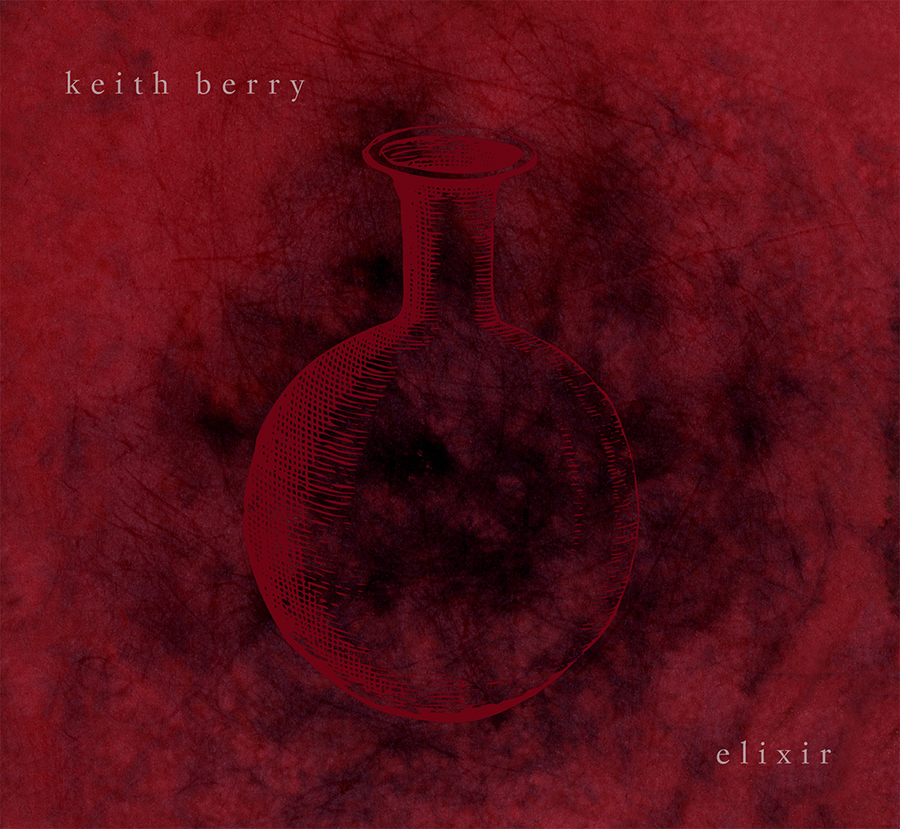
Gatefold sleeve & CD professionally manufactured. Artwork by Matthew Swiezynski. Design by Mount Analogue.
-
Release Date:
March 2017
-
Price:
£8
info
the alchemist jim haynes said of his work: "like falling snow, his dreamy work drifts with a poetic chill and tranquil hypnosis through which peripheral elements tease the listener with subtle details. it's so damn beautiful..."
a bit of background on this release: one of the great inspirations for invisible birds was bernhard günter and his seminal label trente oiseaux. the releases had an enormous influence and one of the gems was keith berry's the golden boat. it was with much pleasure when mr. berry wrote asking invisible birds to release his newest work elixir, and after listening to the wonderful kosmic washes of sound, there was no question than to proceed. the CD features abstract drawings by matthew swiezynski, and graphics by the brooklyn-based design kollektive mount analogue (chi yun and matthew swiezynski).
mr. berry said of the release: "the source material for the heavily granular processed sound that makes up elixir stems from another album of mine titled simulacra to be released shortly by infraction. not so much a remix album but a different take on material that had a strong pull on me, wanting me to return to it and explore the permutations that digital editing software allows."
keith berry is one who gathers many moments of sound over a period of time. the material for this recording (and simulacra on infraction records) traversed through berry's editing system like an alchemist's mystery-liquid, distilling through his alembic and becoming a final sonic spirit that takes innumerable forms and can no longer be recognized. this process is so beyond words and creates work that is further beyond words; the listener enters a complete void.
Towards the Blue Peninsula
-
Label:
-
Format:
CD
-
Release Date:
January 2014
-
Price:
£8
This is a previously unreleased and new work from Keith Berry. Partially
inspired by Koda's "Movements" full-length recording from almost 10 years
ago, Berry has moved away from the computer-based compositions of 'The Ear
That was sold...' utilizing Akira Rabelais's Argeiphöntes Lyre software to
something a bit more windswept perhaps or at times aquatic and organic
sounding. Not that prior endeavors were ever easily categorized as
computer-based, or sterile environments - quite the opposite. What makes
Berry's recordings so engaging, is that one is never quite sure what the
source of sound is. It doesn't matter - each piece in their own right is
magnificent from the debut 'The Golden Boat' to the twin masterpieces, "The
Ear That Was Sold to a Fish" and "A Strange Feather" to "The Cartesian
Plane" LP and now "Towards the Blue Peninsula". Berry's recordings are the
result of letting ideas take their course, revising, re-visiting and
letting the works breathe.
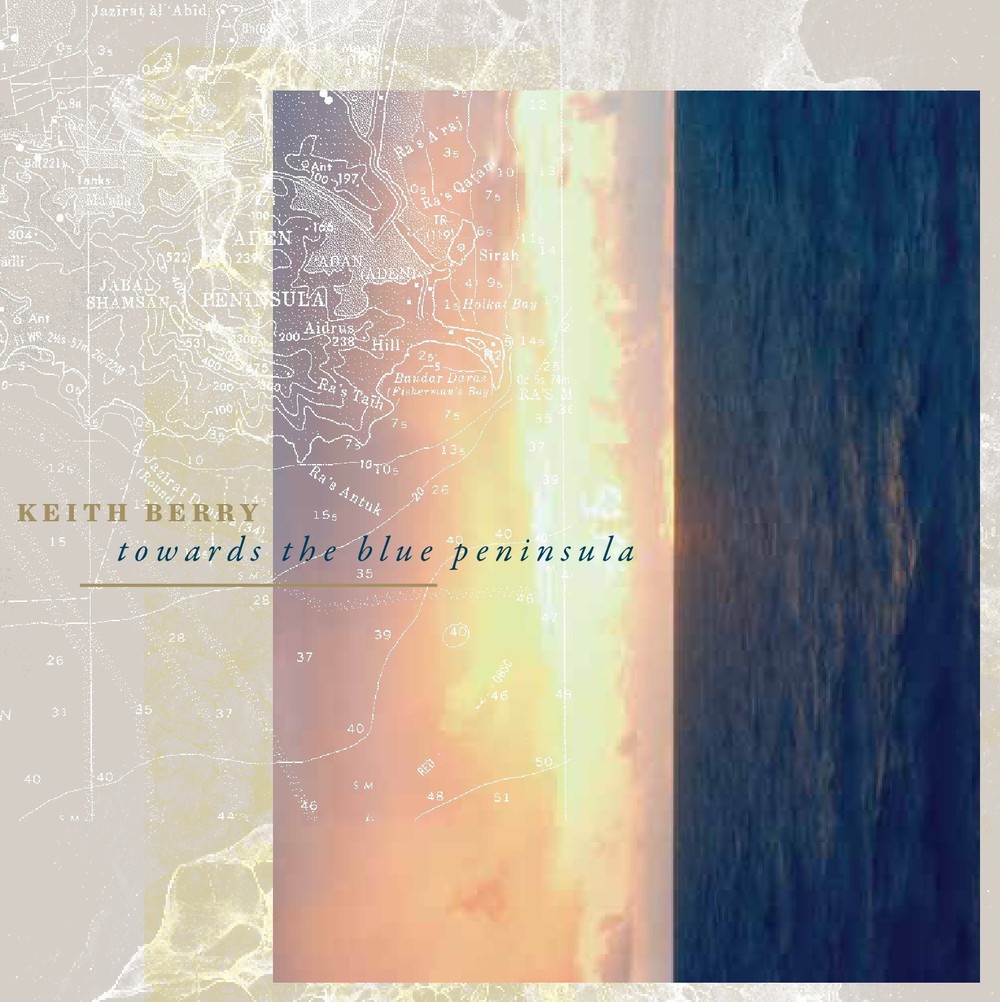
Edition of 500 copies. CD is housed in a gloss cardstock envelope and then
in a tip-on, mini-lp Japanese style gatefold outer sleeve. Designed by
Timothy O'Donnell.
the ear that was sold to a fish / turn right a thousand feet from here
-
Label:
-
Format:
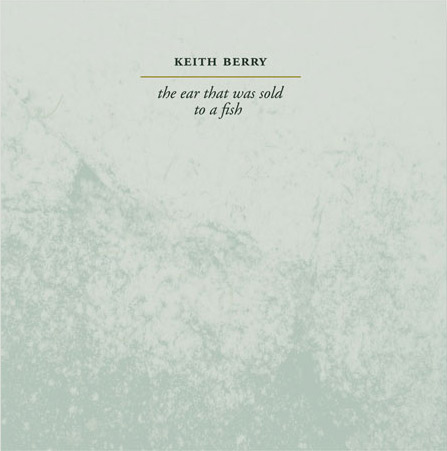
2xCD each housed individually in cardstock envelopes and then packaged in a Stoughton mini-lp gatefold.
-
Release Date:
Reissue April 2011
-
Price:
£8
info
This is the place where film and mind intersect. An intricately detailed and mesmerizing follow-up to this London artist's release on trente oiseaux.
London composer Keith Berry's The Ear That Was Sold To A Fish is a complex, albeit soothing piece, stretching over nine tracks. The movement of the piece is akin to closing one's eyes while floating gently down a nightime river. But ironically, this slow pace demands quick attention, as the sound all around you passes you by. Fortunately, unlike a river experience, one gets the opportunity to discover additional nuances, that in themselves each open new worlds with repeated listening. Crouton is pleased to present this mind encompassing new work from one of the brightest electronic composers in the UK today. His previous work has been released on such labels as trente oiseaux, Authorized Version, and Twenty Hertz. This release is presented as a special hand-numbered and limited edition, packaged in a small kraft box filled with blue smally leaves, and adorned with with an original photographic work by Keith Berry.
the cartesian plane
-
Label:
-
Format:
Picture disc LP
-
Release Date:
July 2010
-
Price:
£10
info
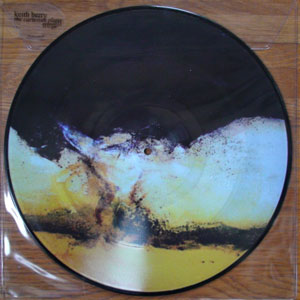
Elevator Bath's ongoing series of picture disc LPs (each record being adorned with full-color artwork by the recording artist) continues with Keith Berry's debut appearance on vinyl: An absolutely mesmerizing cycle of deep, meditative tranquility inextricably linked to Berry's otherworldly painting which appears behind the record's grooves.
The soundscapes along The Cartesian Plane are beautifully absorbing, heavy with the slow unraveling of emotions, almost beyond belief. There is an immense weight to these recordings, the richness of which belies the careful subtlety of the compositions. The sound is expansive and unreal, a perfect complement to the record's visual aspects which seem to describe a kind of alternate existence. Like bookends, the colorful images house a wealth of experiences, wonderful and frightening. As you gaze upon the rotating colors and Keith Berry's dense dream-sounds pour out of the speakers, total immersion in The Cartesian Plane is more than probable, it is certain.
Five years have passed since Keith Berry's masterful The Ear That Was Sold To A Fish, a disc that was something of a revelation for the lucky few who were able to obtain a copy of the original release. Since that time Berry's reputation has steadily grown, even though his discography has not. Aside from a few compilation appearances (including Elevator Bath's A Cleansing Ascension), he has remained silent. The release of The Cartesian Plane then truly calls for celebration, as it is precisely the record those of us who admire Berry's work have longed for.
a cleansing ascension
-
Label:
-
Format:
CD
-
Release Date:
October 2008
-
Price:
£9
info
On the occasion of Elevator Bath's 10-year anniversary, the label has issued its first compilation release. This 73-minute compact disc is not a retrospective but is instead a collection of (almost) entirely exclusive material from 10 artists currently involved with Elevator Bath.
A Cleansing Ascension includes previously unreleased recordings from: Matt Shoemaker, Adam Pacione, Jim Haynes, Keith Berry, Rick Reed, Dale Lloyd, Colin Andrew Sheffield, James Eck Rippie, and Tom Recchion.
This is the ideal introduction to the label, offering a particularly cohesive yet varied selection of works from some of the brightest names in the experimental music community. Uneasy narrative, warm ambience, rusted drones, sine waves, field recordings, meditative composition, plus a glorious photograph on the inner sleeve (taken by Colin's father in 1971) can all be found in this single, beautiful package. Elevator Bath = A Cleansing Ascension.
elevator bath Colin Andrew Sheffield
01 matt shoemaker | waning ataraxia | 7’22
02 adam pacione | soilbind morning glory | 4’46
03 jim haynes | like a thief in the night | 7’19
04 keith berry | toward the blue peninsula | 8’04
05 rick reed | the fiery sound of light | 10’01
06 dale lloyd | our morphosis | 6’01
07 colin andrew sheffield | for today | 8’30
08 francisco lópez | untitled #194 | 5’20
09 james eck rippie | hidden mirrors | 10’40
10 tom recchion | drift tube | 5’07